


For true energy autonomy, a complete backup solution is essential, one that stores the solar energy produced during the day for use in the evening or during outages.
We have the solution that will keep you in the light and independent of the grid. Our next series of inverter/chargers provide this autonomy:
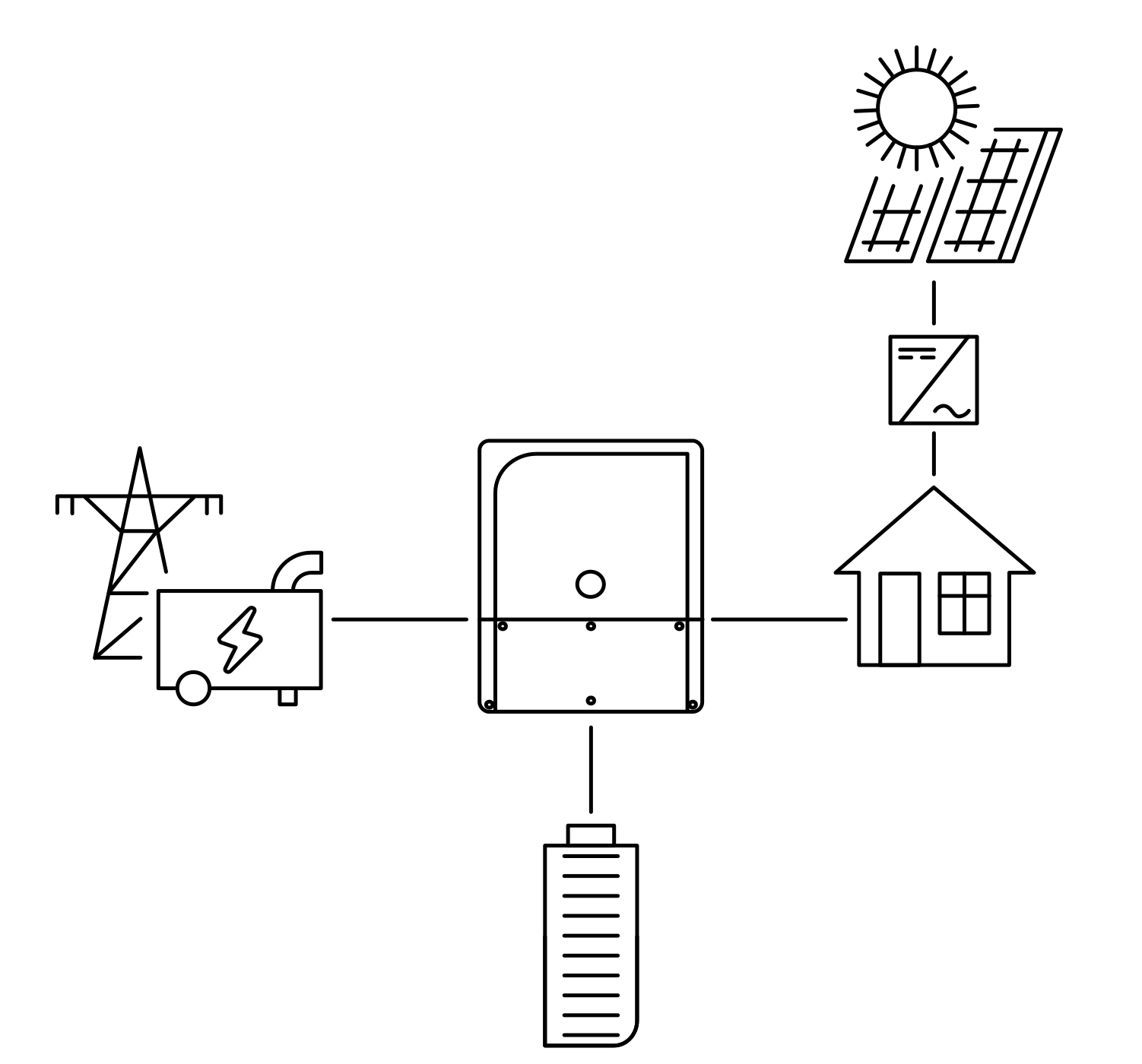
AC coupling (add storage to an existing solar system)
The AC coupling is the principle of using separated battery inverters and AC PV inverters in the same system, ideal, when you want to add batteries to an existing solar installation.
In island mode, the next1, next3 or the xtender battery inverter generates the local grid’s voltage and frequency. The solar grid inverters then synchronize to this local grid just as they would with the public grid.
In this setup, solar production is directly used by the AC loads, and any excess is stored by our inverters-chargers in the batteries for later use. When the PV inverter is connected to the AC flex input/ouput of the next, the Studer system can fully monitor and measure the solar production.
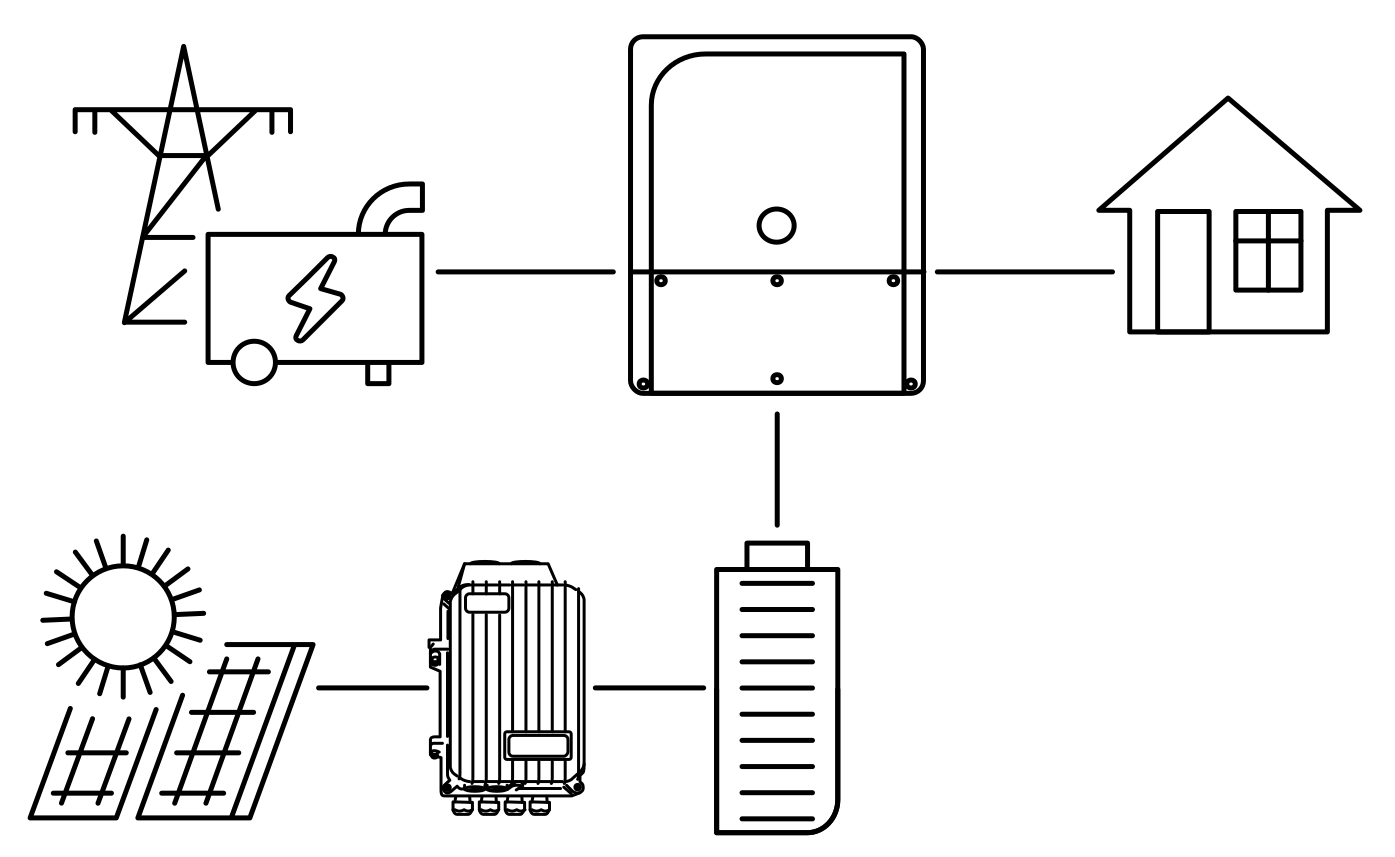
DC coupling (extend your studer system with more solar)
DC coupling is the principle of connecting PV modules directly to the battery system via a DC charge controller.
With our variotrack and variostring charge controllers, solar energy is sent directly to the batteries, without the need to first convert it to AC. The xtender or next inverter then uses this stored energy to power AC loads at any time, even during grid outages.
You can extend the existing studer solar system at any time with the addition of new vario solar chargers.
This setup ensures high efficiency and precise control of both charging and consumption. The Studer system continuously monitors solar input, battery state, and power flows, providing a reliable and intelligent solution for energy autonomy.
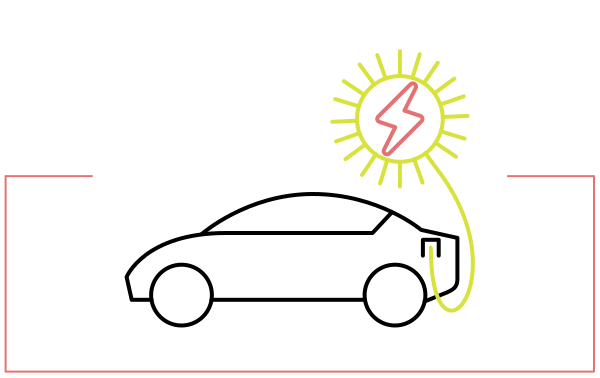
Having a solar charging station right at your home or industry is a game changer. With the next inverter-charger series, electric mobility becomes solar mobility.
You can charge during the evening with your solar energy that has been produced during the day. With it’s 16kW power the next3 is able to fully power a 12kW car charger.
By connecting your EV charger to the AC flex input/output, you can:
Monitor exactly how much energy your car consumes
Automatically disconnect charging during a blackout or if the battery drops below a set level (e.g. 50%) or other configurable conditions
Energy management systems
With our open Modbus and protocols, we are compatible with existing energy management systems (EMS) like Solar Manager, Loxone… This opens possibilities to applications such as dynamic pricing control, VPP integration and many more.
Develop your system with Openstuder
We maintain a very open communication philosophy, using our communication bridges every professional can integrate studer devices (with full control and information) into advanced monitoring and control systems.
We have different public protocols for external communication:
- xtender inverter-charger series: Studer serial protocol, Studer CAN public protocol, Studer Modbus RTU public protocol
- next inverter-charger series: Studer Modbus RTU & TCP/IP public protocols
There is a wide range of advanced monitoring systems that already incorporate our protocols. If you want to integrate studer into your own platform or learn more about advanced monitoring and control integration please contact our team and check Openstuder and our download center under the section openstuder for further information.
“Can I control my water heater according to my solar production? “ This is a very common request from the system owner (final customers).
Yes, it is possible to control your hot water production according to your solar production. For example, by combining AC•THOR or AC ELWA 2 provided by my-pv with our xtender or next inverters, it is possible to use the surplus of photovoltaic electricity that cannot be stored in the battery to generate heat.
This even works in offgrid or island installation. When the battery is fully charged, the inverter increases the AC output frequency. My-PV detects the increase in frequency and increases the heating power accordingly. Contact our team to know more
The AC flex output connection of the next inverter-charger series can be programmed to disconnect power supply in certain conditions (such as a blackout, or low battery levels etc.) to conserve energy for essential appliances, ensuring uninterrupted power to critical loads.
It can also be programmed to be activated according to certain conditions, useful for powering your loads based on your solar production.
Besides the AC flex the inverter also has dry contacts and inputs. Those I/O allows to realise mini-domotics applications without additional hardware. The physical contacts on our products allow you to start certain appliances according to the conditions specified in the inverter configuration. Without the need for an external home automation system.
This technology enables your vehicle to function as mobile power stations, providing electricity to power external devices and equipment.
It has a wide range of potential applications, from powering tools and appliances on a worksite to providing emergency power during a blackout.
If your vehicle is equipped with such an output, you can connect it to the inverter like an emergency genset.
The grid feeding is fully controllable with settings.
Zero feed-in: In some cases, it is not allowed to inject solar energy into the grid. Solar is used for the load and excess goes to the storage, never to the grid.
Limited grid feeding: With the increase of solar installation, the grid is under stress. In some cases, it is asked to limit the peak power injected into the grid during the day. This is fully programable in our devices.
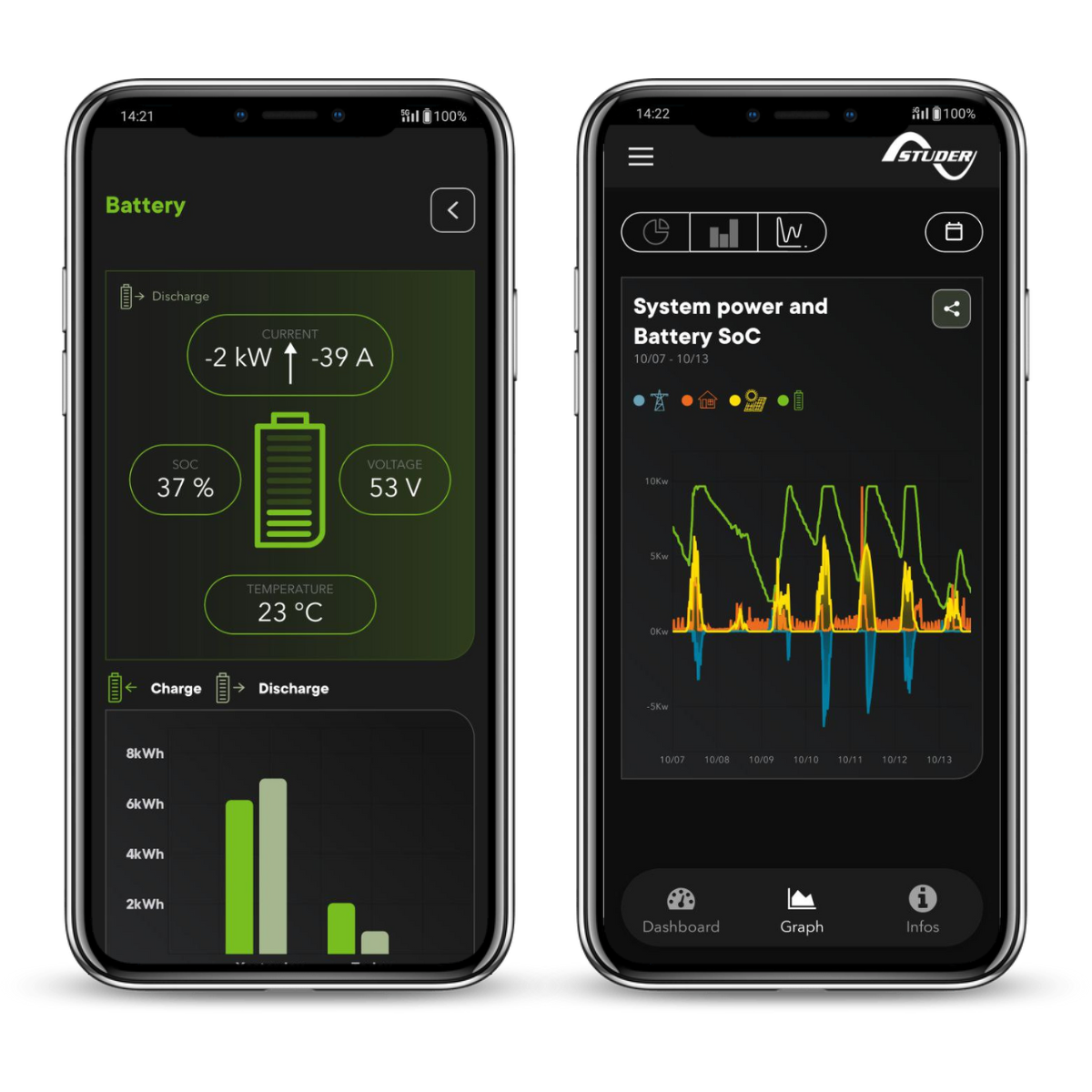
Studer monitoring app
A quick look at your main system performance indicators from your tablet/phone.
Find out more about it here or download now in the Apple Store or Google Play.
Optimised self-consumption: use your solar energy during the day, store the surplus, and keep a reserve in case of power cuts.
For true energy autonomy, a complete backup solution is essential, one that stores the solar energy produced during the day for use in the evening or during outages.
We can provide systems up to 72kVA to power your essential loads.
In the event of a blackout, the system instantly switches from grid to off-grid mode, ensuring an uninterrupted power supply, no additional accessories needed. You won’t even notice the change.
AC coupling (add storage to an existing solar system)
The AC coupling is the principle of using separated battery inverters and AC PV inverters in the same system, ideal, when you want to add batteries to an existing solar installation.
In island mode, the next1, next3 or the xtender battery inverter generates the local grid’s voltage and frequency. The solar grid inverters then synchronize to this local grid just as they would with the public grid.
In this setup, solar production is directly used by the AC loads, and any excess is stored by our inverters-chargers in the batteries for later use. When the PV inverter is connected to the AC flex input/ouput of the next, the Studer system can fully monitor and measure the solar production.
DC coupling (extend your studer system with more solar)
DC coupling is the principle of connecting PV modules directly to the battery system via a DC charge controller.
With our variotrack and variostring charge controllers, solar energy is sent directly to the batteries, without the need to first convert it to AC. The xtender or next inverter then uses this stored energy to power AC loads at any time, even during grid outages.
You can extend the existing studer solar system at any time with the addition of new vario solar chargers.
This setup ensures high efficiency and precise control of both charging and consumption. The Studer system continuously monitors solar input, battery state, and power flows, providing a reliable and intelligent solution for energy autonomy.
Energy management systems
With our open Modbus and protocols, we are compatible with existing energy management systems (EMS) like Solar Manager, Loxone… This opens possibilities to applications such as dynamic pricing control, VPP integration and many more.
Develop your system with Openstuder
We maintain a very open communication philosophy, using our communication bridges every professional can integrate studer devices (with full control and information) into advanced monitoring and control systems.
We have different public protocols for external communication:
- xtender inverter-charger series: Studer serial protocol, Studer CAN public protocol, Studer Modbus RTU public protocol
- next inverter-charger series: Studer Modbus RTU & TCP/IP public protocols
There is a wide range of advanced monitoring systems that already incorporate our protocols. If you want to integrate studer into your own platform or learn more about advanced monitoring and control integration please contact our team and check Openstuder and our download center under the section openstuder for further information.
Peak power can be automatically compensated using the battery. This makes it possible, for example, to bypass grid connection limitations and lower your bills.
A smart power meter can be installed at the electrical main entry point of the building if not all the consumption and production is monitored by the inverter.
This measurement unit allows the next1 or next3 device to know the balance of consumption/production and then to decide when to charge or discharge the battery.
Only the power meter supplied as an accessory by Studer Innotec must be installed.
In a three-phase electrical system, each phase ideally carries the same load. But in reality, some phases can be overloaded while others are underused. The Smart boost2 is able to perform phase balancing.
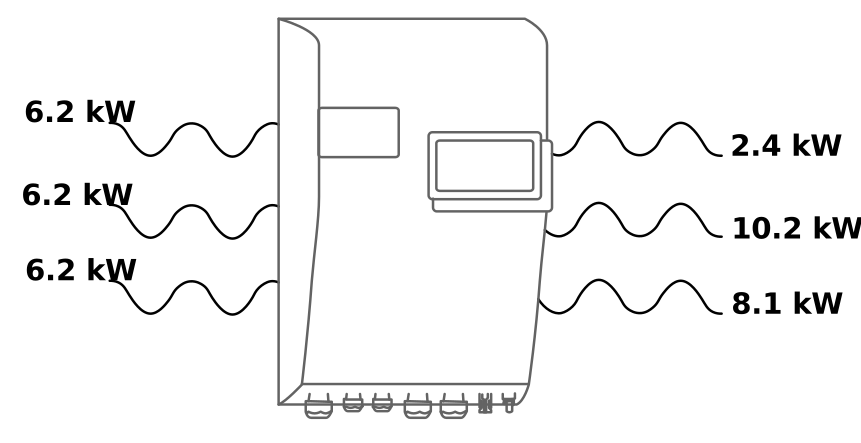
In an electrical network, excessive reactive power consumption causes several problems for the end user: increased current flowing through cables, additional losses, voltage drops and financial penalties imposed by network operators when the power factor becomes too low.
Our inverter-chargers optimise active and reactive energy management, which includes advanced algorithms to limit unnecessary reactive power exchanges with the grid. This helps to improve the power factor and therefore reduce the kVARh billed.
In addition, the combination with battery storage and intelligent control functions makes it possible to smooth power demands, optimise the use of available active power and avoid costly oversizing of cables or transformers.
The grid feeding is fully controllable with settings.
Zero feed-in: In some cases, it is not allowed to inject solar energy into the grid. Solar is used for the load and excess goes to the storage, never to the grid.
Limited grid feeding: With the increase of solar installation, the grid is under stress. In some cases, it is asked to limit the peak power injected into the grid during the day. This is fully programable in our devices.
Our monitoring web portal, gives you advanced insights on your energy use.