


© All outdoor pictures from IMPACT LIVING
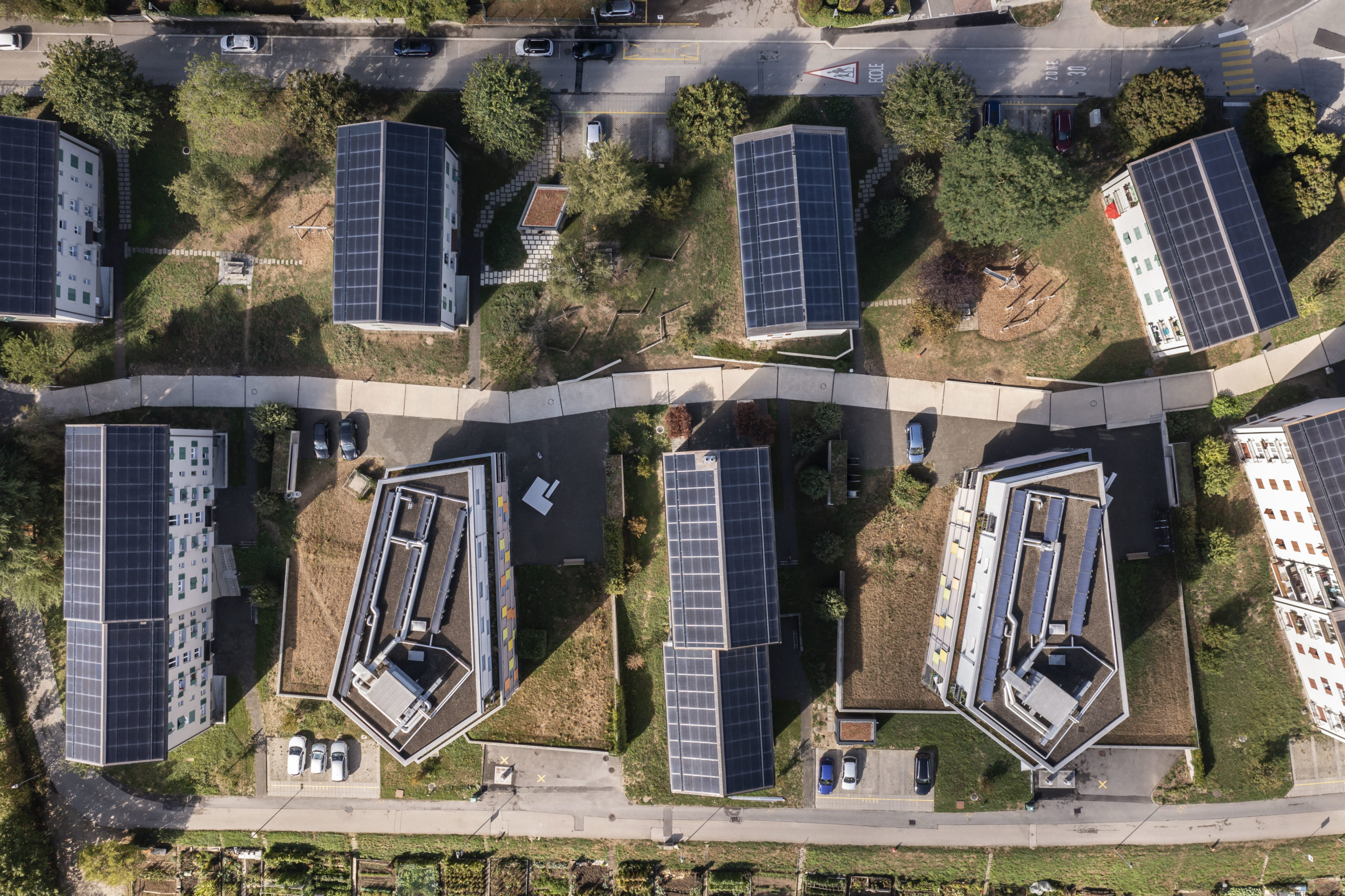
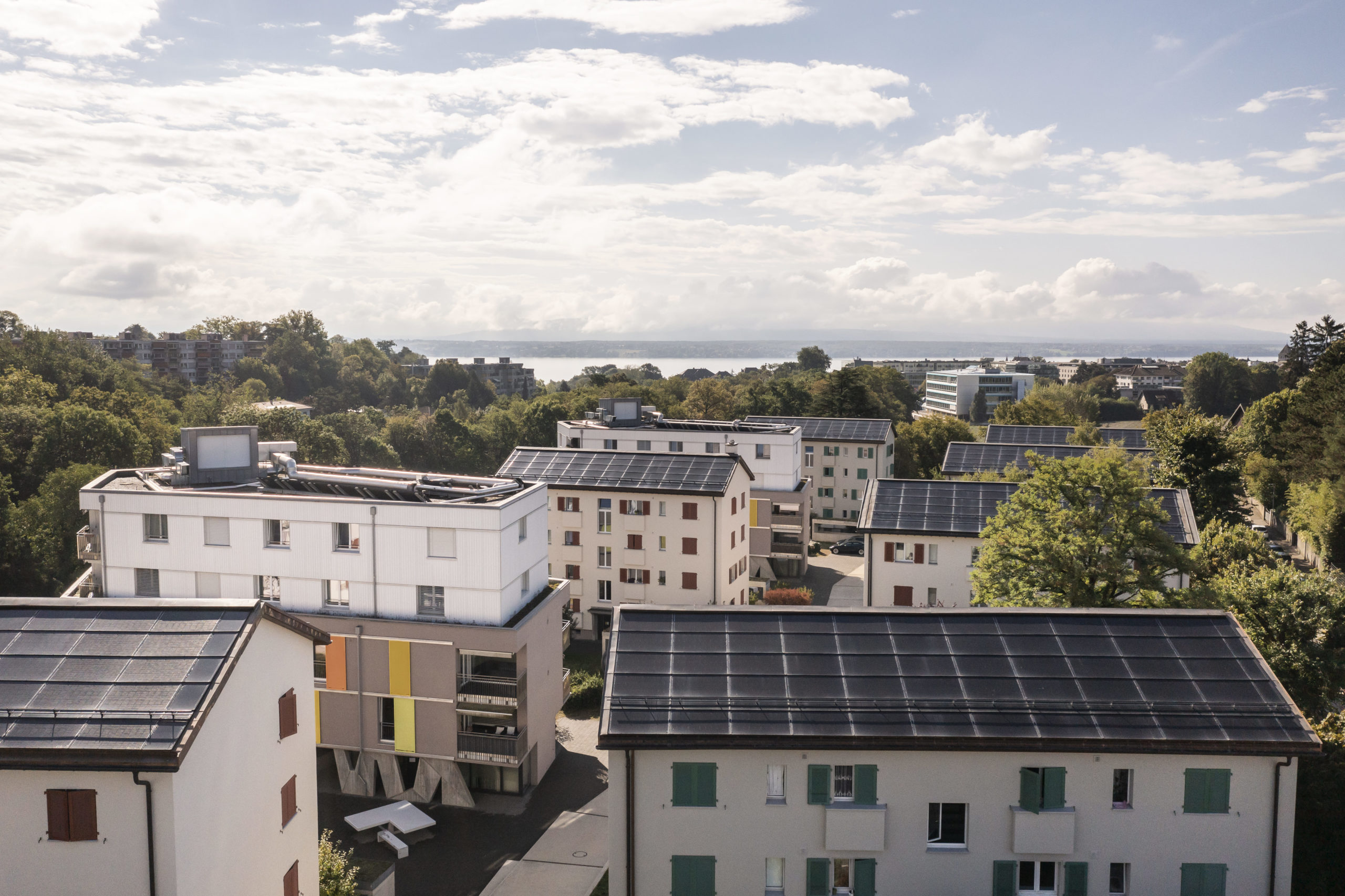
In Switzerland, nine buildings share locally generated solar electricity through an interconnected system enabling 104 apartments to have access to clean energy and security against rent increases caused by fossil fuel prices.
The solar panels at Quartier la Paix in Nyon, the Studer next3 inverter-chargers with battery storage works together to increase the local use of solar energy and ensure a reliable power supply even in the event of a power cut to ~300 people.
Renovating a neighbourhood while preserving affordable housing
The La Paix Housing Co-operative was founded in 1946 with the aim of addressing the shortage of flats with affordable housing on the market. In 2018, its general meeting approved a broader renovation programme aimed at reducing dependence on fossil fuels and improving energy autonomy.
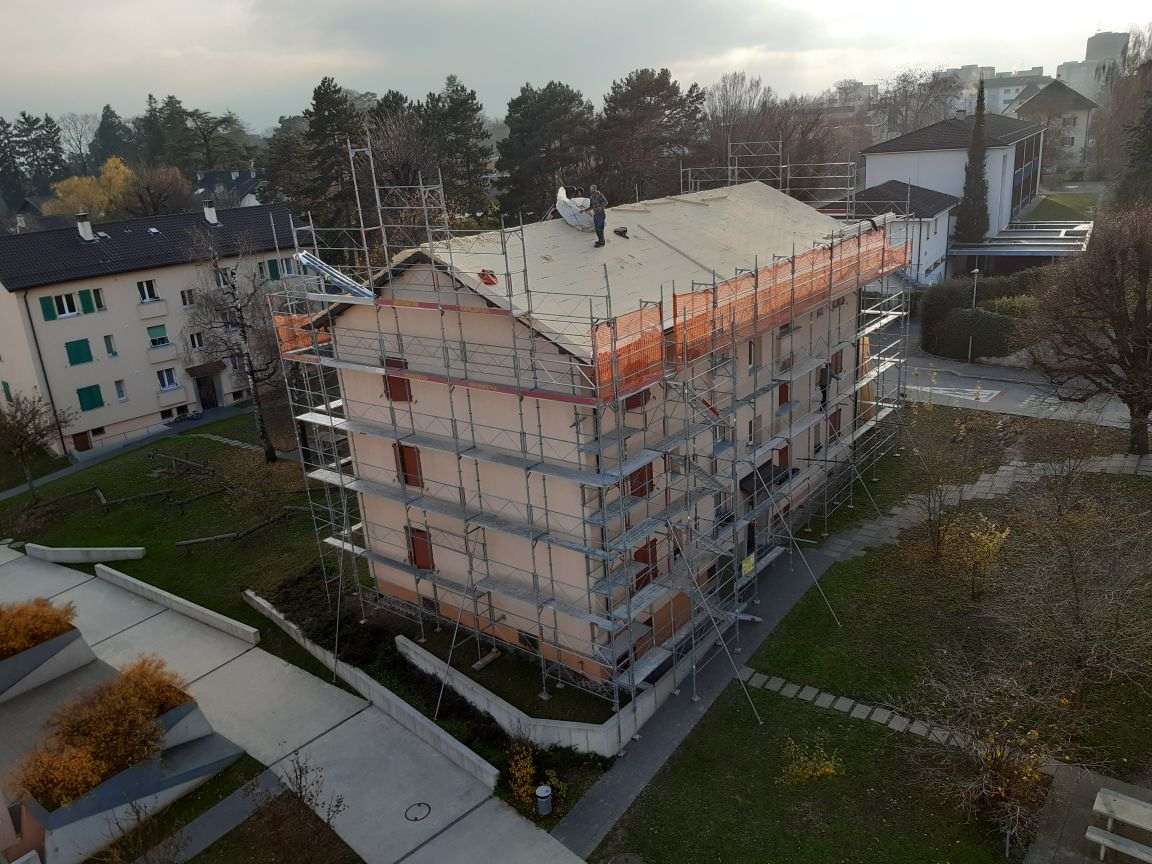
In addition to the installation of PV panels, battery storage systems and our hybrid inverter-chargers next3, roof insulation and decentralised heat pumps, charging infrastructure for electric vehicles where added to reduce energy demand and dependence on fossil fuels.
Impact Living developed the energy concept and managed the project. A first building served as a pilot before the approach was extended across the neighbourhood.
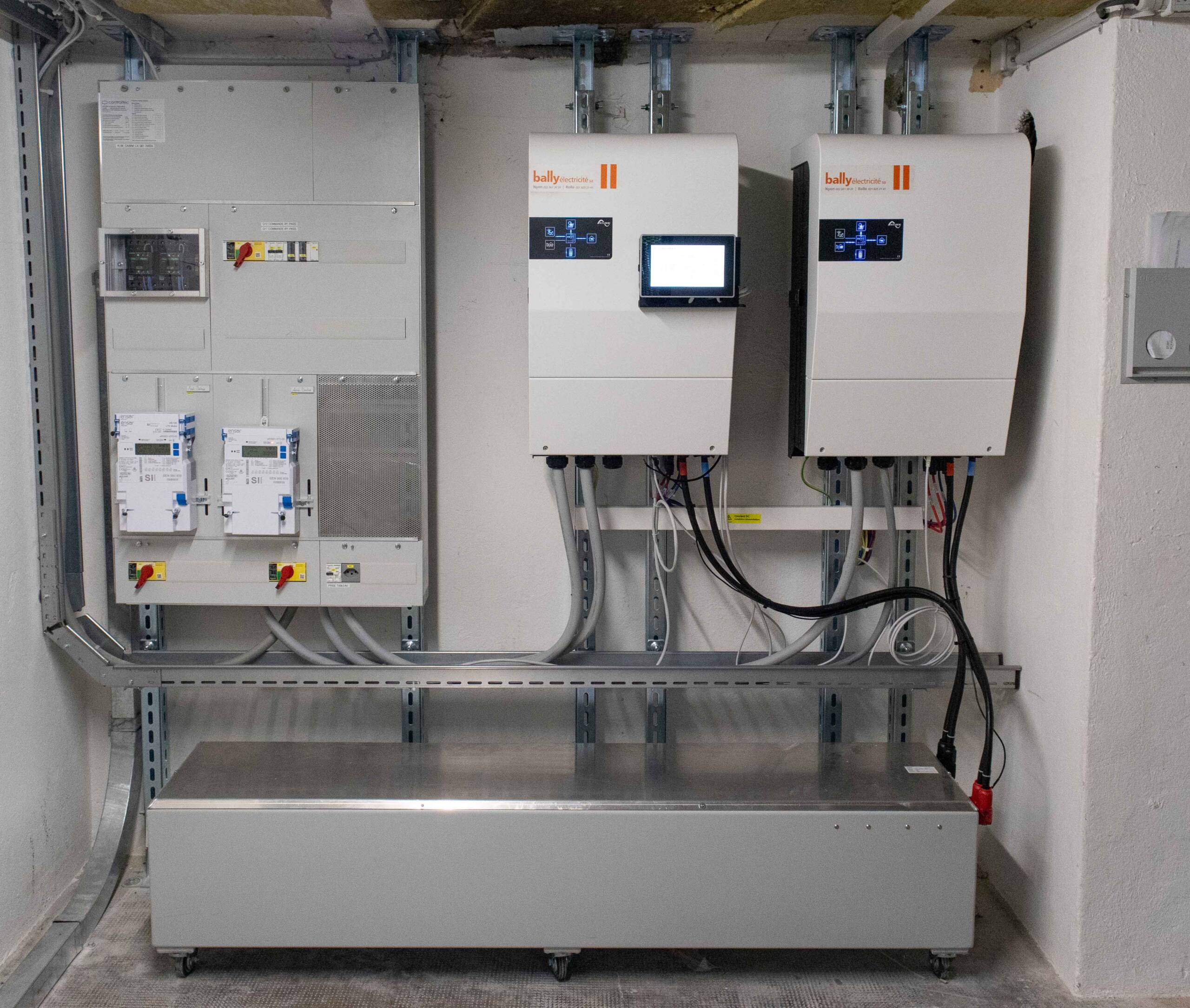
Our next3 inverter-chargers are the energy heart of this system
Each building is equipped with one next3 inverter-charger (16 kVA), or two units operating in parallel (32 kVA). Photovoltaic production is integrated in two ways: through direct connection to the next3 MPPT inputs (8+8 kW), or separate grid inverters using AC coupling via the next3 AC flex connection whilst still being possible to use the included MPPT inputs on the next3. The connection method varies between installations, allowing solar production to be integrated with storage at building level.
The swiss made next3 unit(s) installed in each building manage solar power generation, optimise battery charging and discharging, and distribute electricity throughout the building even during a blackout. Any surplus energy that cannot be stored is used by other buildings or fed into the grid.
Making solar electricity available across all the different buildings
The photovoltaic installation covers a total of 1,600 m² and produces around 300,000 kWh a year.
As a “minigrid” these 9 buildings thanks to the next3 inverter-chargers can share the energy between them to compensate for production deficit, rather than limiting its use to the building where it is produced. Excess solar power is used to charge electric cars.
The internal electrical grid works with 400 energy meters supporting electricity exchanges and accounting for residents.
Storing daytime production and prioritising essential loads
Custom-built batteries supplied by Autos & Energies provide a total storage capacity of 300 kWh across the site. The energy generated by the solar panels and optimised by the next3 is used directly to power the buildings; our inverter stores any surplus energy generated during the day in the batteries to be used after sunset.
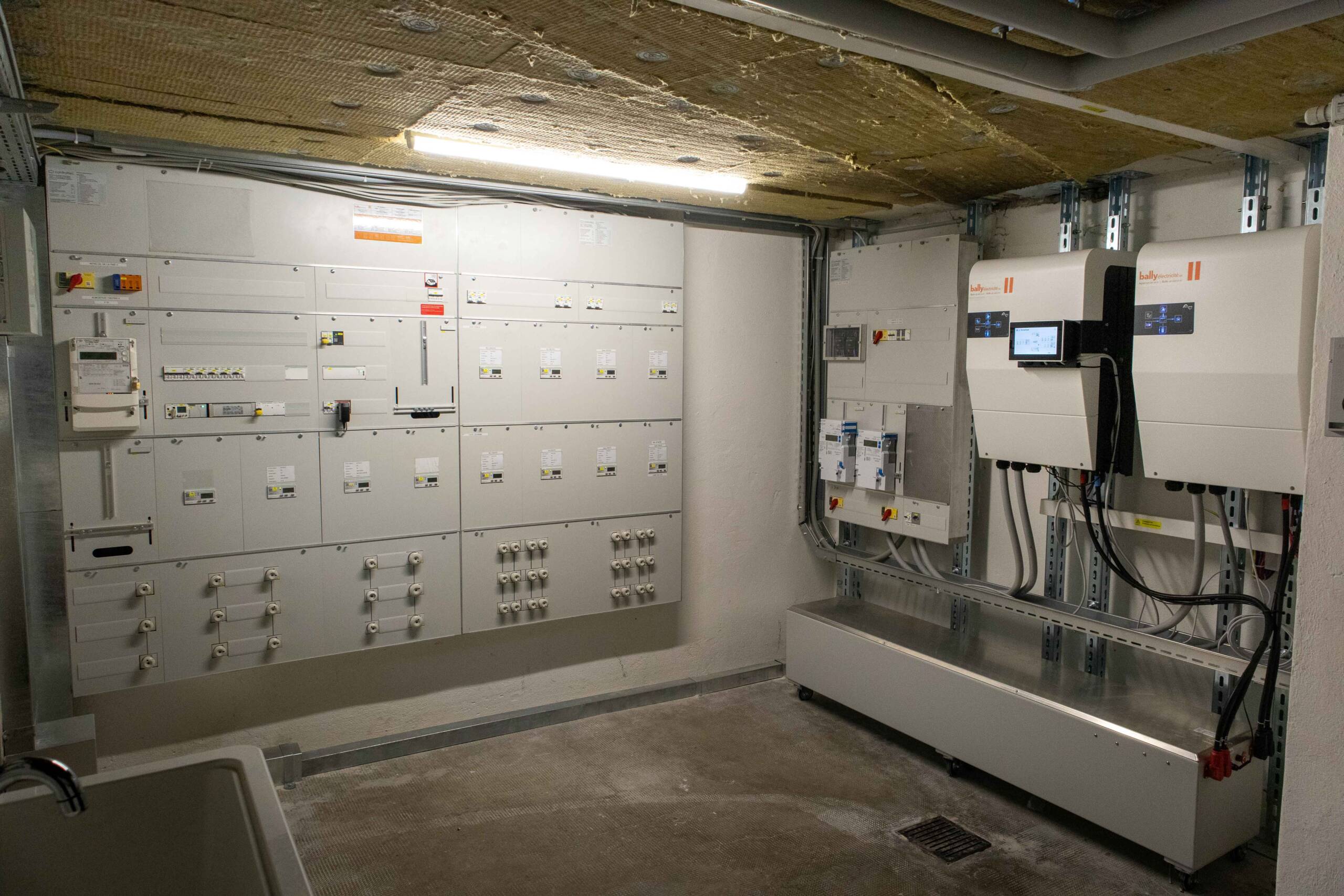
During a public grid outage, the installed next3 prioritises essential loads by disconnecting common-areas, heat-pumps and powers only essential loads. This is made possible with the next3’s AC flex, a fully monitored input/output, which can be configured as a second AC source or an additional controlled load.
AC flex offers great opportunities as solar AC coupling, can also be used with a genset, wind+hydro, V2L and programmed for load management and shedding… The programming (huge range of configuration depending on the settings you choose: battery level, solar power, grid failure and much more) is done independently for each phase: L1, L2, and L3. This means that for a multi-unit system with three next3 units, there can be up to 9 single-phase controllable loads/charges.
At the opening ceremony for the renovated neighbourhood, which we attended, the area was disconnected from the Nyon electricity grid. The rest of the evening was spent offgrid.
Benefits for residents of the La Paix neighbourhood
Producing and sharing solar electricity on site helps protect residents from volatile fossil-fuel prices and the increase in grid electricity prices. The renovation was carried out without increasing rents, thanks to the savings made by replacing fossil fuels and installing solar systems, allowing the co-operative to uphold its commitment to affordable housing.
Combined with battery storage, the neighbourhood’s own solar production strengthens its energy autonomy and makes daytime generation available after sunset. In the event of a blackout, next3 inverter-chargers provide backup power for essential loads. Electric vehicle charging infrastructure provides a further use for local solar electricity.
Date:
October 15 , 2026
Components:
- 1,600 m² of solar panels across the site.
- One or two units of next3 inverter-chargers with integrated solar MPPT inside each nine buildings.
- Custom-built batteries with total capacity of 300 kWh across the site.
- Solar AC coupling for buildings requiring more solar power.
400 energy meters for measuring flows between buildings and calculating rental fees.
Electric vehicle charging point (plans for up to 100 smart charging points).

The customer:

Date:
October 15 , 2026
Components:
- 1,600 m² of solar panels across the site.
- One or two units of next3 inverter-chargers with integrated solar MPPT inside each nine buildings.
- Custom-built batteries with total capacity of 300 kWh across the site.
- Solar AC coupling for buildings requiring more solar power.
400 energy meters for measuring flows between buildings and calculating rental fees.
Electric vehicle charging point (plans for up to 100 smart charging points).
The customer: