


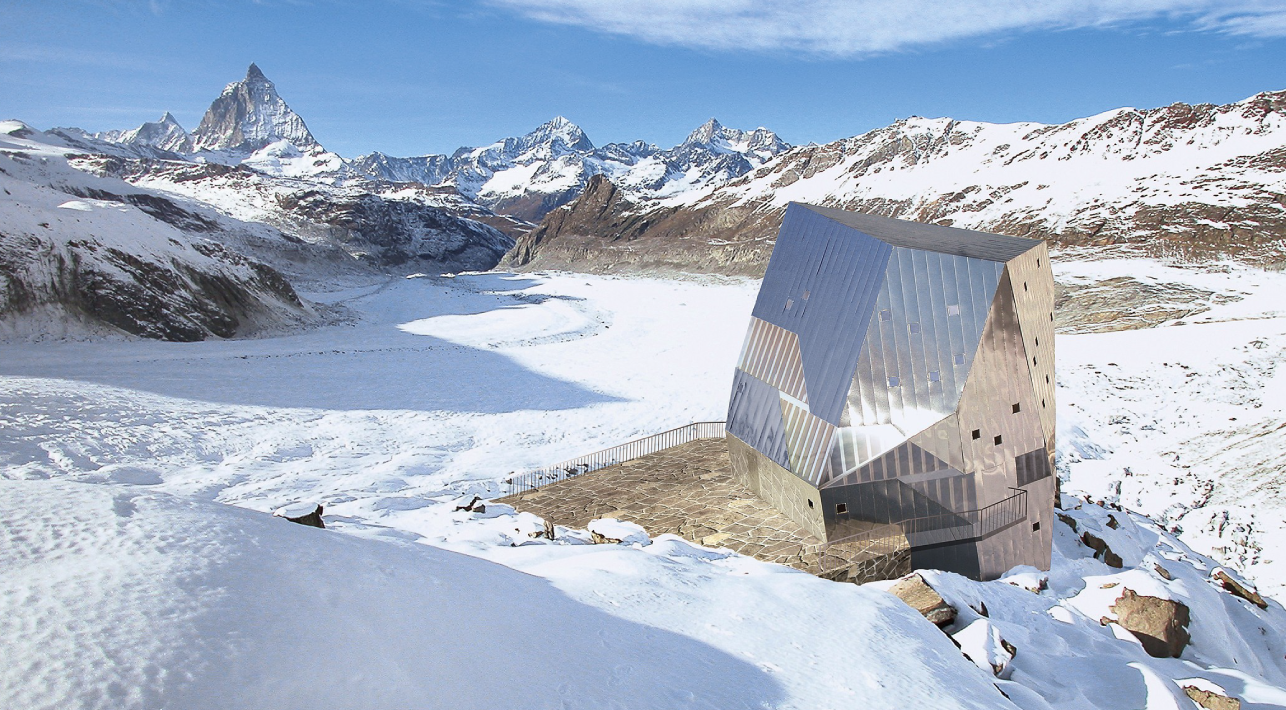
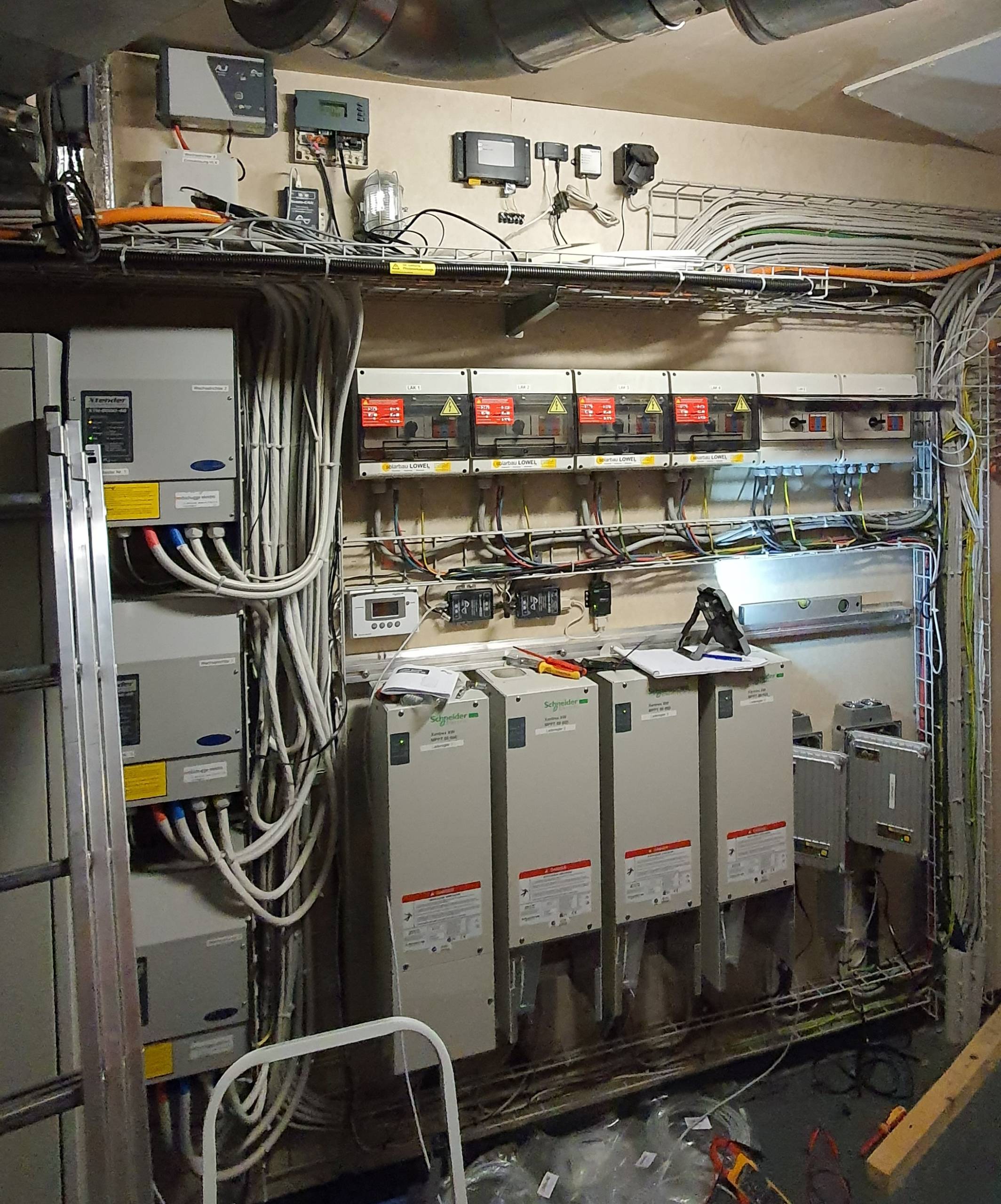



The Monte Rosa Hut, also known as the Bétemps Hut, is a mountain hut owned by the Swiss Alpine Club and located at an altitude of 2,882 m in the canton of Valais. It is situated at the foot of the mountain from which it gets its name. It overlooks the Gorner Glacier and offers a magnificent view of the majestic Matterhorn. This offgrid building is powered by solar energy thanks to our Swiss made xtender inverter-chargers and our variostring solar chargers.
Before discussing the energy system, let’s talk a little about the history of this hut.
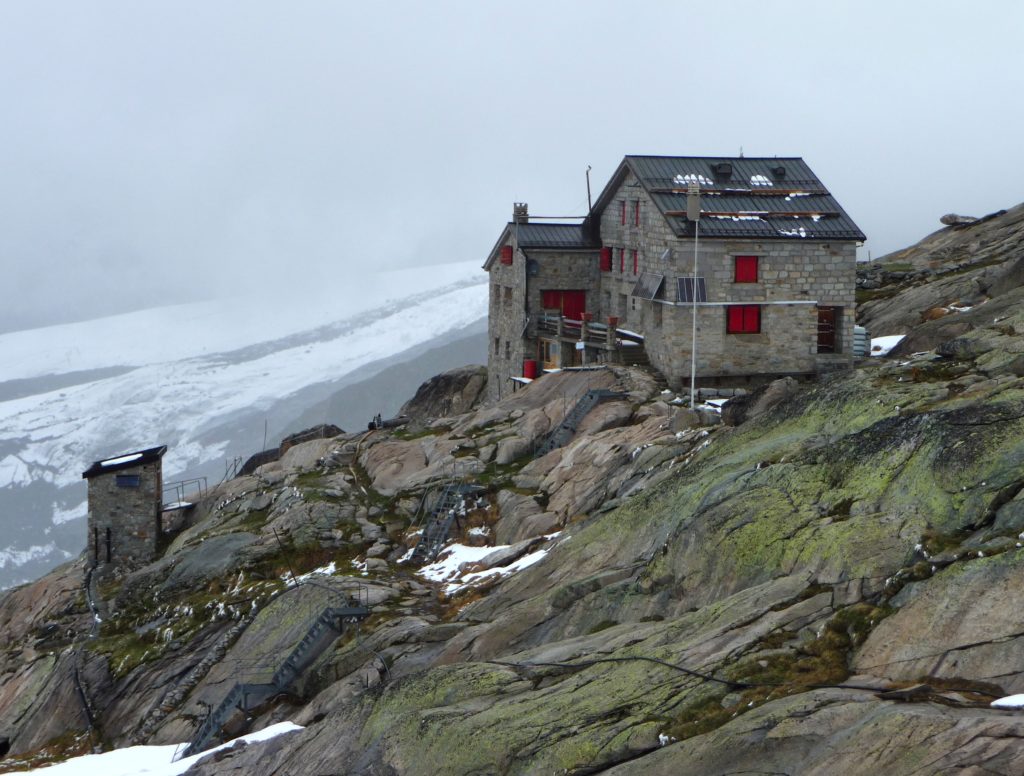
The first hut was built in 1895 from timber, with the assistance of the engineer François Bétemps, who gave the cabin its original name. In 1918, it was extended, increasing its capacity from 20 to 45 beds. In 1929, the hut was donated to the Monte Rosa section, after which it adopted its present name.
In 1940, a new building was constructed with a capacity of 86 beds and was enlarged two times to accommodate up to 160 guests.
After all these enlargements, a whole new concept for the Monte Rosa hut was built in 2009 with a capacity of 120 places. It is the result of a common project between the Monte Rosa section, the Swiss Alpine Club and the ETH Zurich who as developed the software program to control the entire system remotely including our inverter-chargers and solar chargers.
The remote-control software for the installation was developed using our Openstuder protocol. It enables any Studer system customer to integrate our devices into their own advanced monitoring and control system. Our inverters and chargers communicate with the control system via the Modbus gateway of the xcom 485i accessory, allowing complete control of the installation through the control system software developed for the cabin.
You can find the documentation on our publics protocols here or in our download center under the section openstuder.
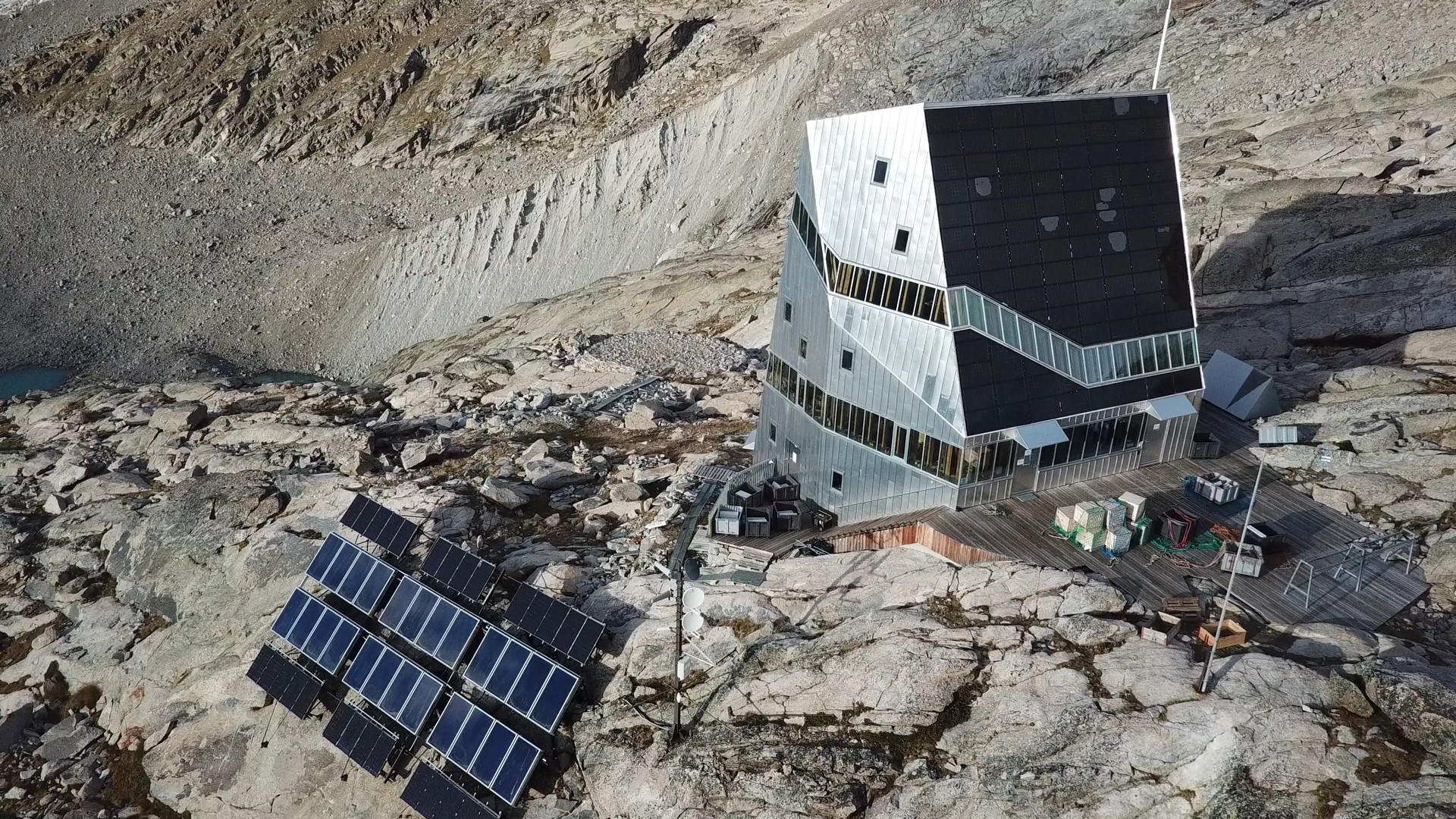
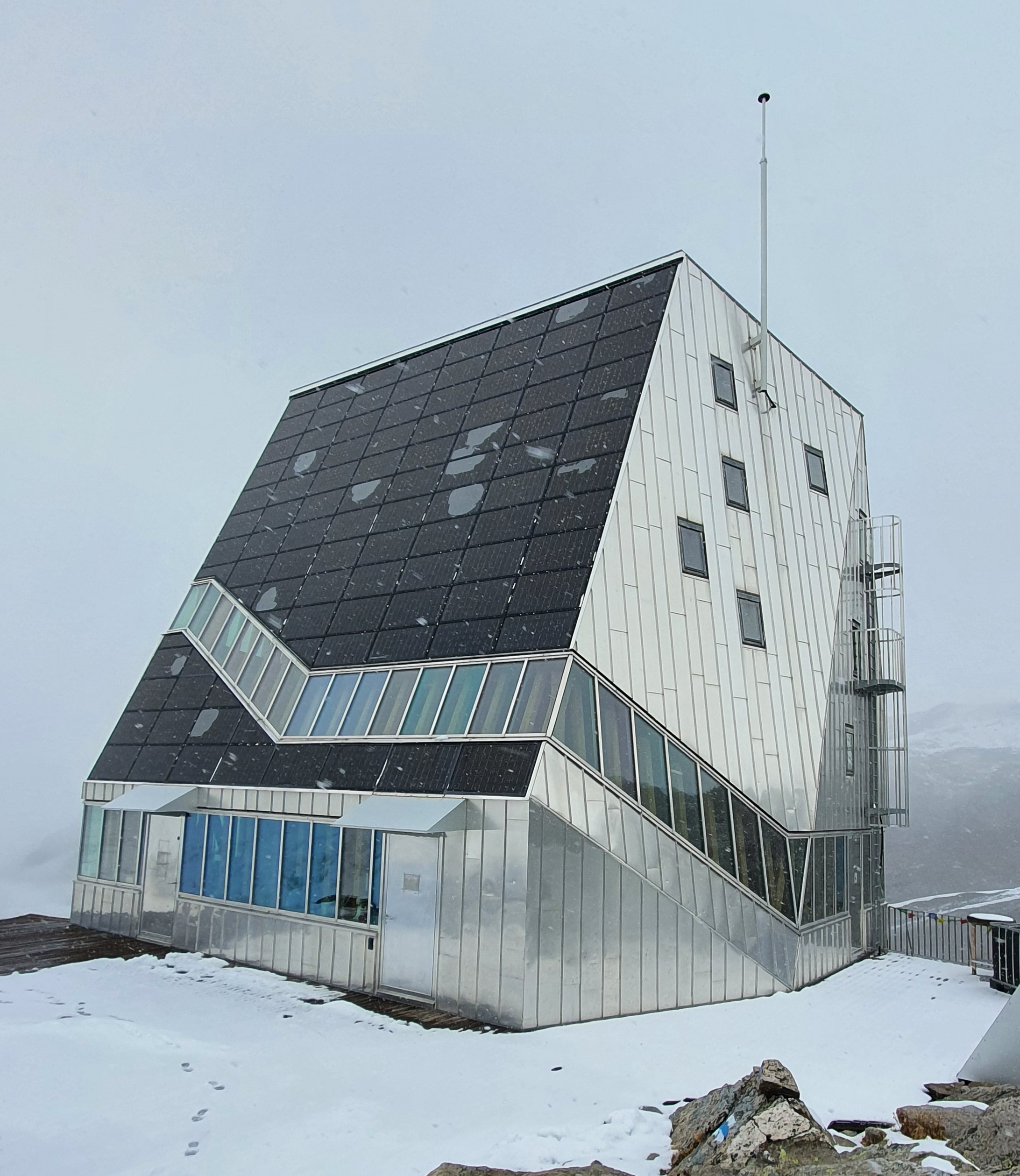
The new building is clad in aluminium panels. A photovoltaic system combined with solar thermal panels is integrated into the south-facing façade of the hut, ensuring a high degree of energy self-sufficiency and a reliable power supply for mountaineers spending the night there. The melted snow is piped to a rock cave to be used as drinking water and the filtered wastewater is reused for toilet flushing.
A solar field consisting of 128 panels is connected to four of our variostring vs 70 charge controllers. Our variostring, world champion for efficiency in isolated converters with >98% and high MPPT tracking efficiency >99.8%, ensures the charging of lithium batteries. Their low standby power consumption is an advantage for offgrid installations, perfect for extending battery life and avoiding excessive energy consumption during periods of low load, such as at night.
Three of our inverter-chargers xtender xth 8000-48 are providing one phase power (total of 24 kVA) for the hut and a combined heat and power (CHP) generator can bridge the energy gap when needed and also produce hot water.
In 2022 the energy flow analysis through our web monitoring portal revealed that the lead batteries used since the opening (2010) of the hut would soon reach the end of their life. Siemens was therefore commissioned to design the entire solution and replace the 48 lead-acid batteries in the technical room with 14 lithium iron phosphate (LFP) batteries with a total capacity of 215 kWh.
As the access to the hut could not be done by road, the regional airline Air Zermatt was responsible for transporting the 8.6 tonnes of weight of the old batteries and heliporting the 2.7 tonnes of lithium batteries to the refugee.
In order to help with the installation of the new batteries we sent one of our technicians to the site. The installation was fully operational in only two weeks.
Thanks to this new solution, the autonomy of the hut can be increased, and even reduce the use of the generator while ensuring a safe, efficient, and sustainable energy supply, only by replacing the batteries. This is what makes the real difference, the adapting of Studer technology over time even under the most adverse conditions.
January 07, 2025
January 07, 2025